Despite economic woes and uncertainty in recent times, I am always encouraged to see investment in hotels, which can only be positive for the beleaguered hospitality industry, especially the revitalisation and renovation of historic buildings and monuments, and even some much-needed uplifts to classic yet weary-looking iconic hotels.
Whilst I am far from educated in construction, I suspect the pros & cons of new build vs renovating an existing site are both fraught with challenges, especially in prime, central locations and buildings with significant historic value. Preserving iconic landmarks is generally a shared responsibility among governments, heritage organisations, private landowners, and the investment sector.
Some argue that luxury hotels and brands occupying historic buildings shouldn’t be limited to high rollers, super-elite and high-wealth guests. The commercialisation of historic buildings has been a debate throughout much of my career. But sadly, many buildings are falling apart, and the luxury hospitality sector is providing distinct benefits for architectural preservation, which is open for all to visit, if only for a cup of tea and to wander through public spaces or for a special splurge with a stay.
Over the years, I’ve been excited to be invited on early hard-hat tours of work in progress. An early introduction to a new yet-to-open hotel undoubtedly gives a good event planner a head start in conversations and forward planning – and often a competitive advantage. However, how many times is the grand opening rescheduled as aspirational owners & investors conflict with construction companies, unforeseen delays, and new challenges? Thus making it a difficult event planner’s proposition until a realistic, truly secured, guaranteed opening date is set.
One of the most anticipated and rescheduled openings in my memory was actually a new build. Shangri-La Shard in 2014. I was an eager event planner with secured client interest, and a desire to be one of the first events in this sky-high hotel. Delay after delay until the opening was assured. Event booked, there I was within days of its official opening, its first event with an incomplete hotel. The pool and bar were still unfinished, but the group’s joy wasn’t diminished; the hotel delivered brilliantly, and the client returned year after year.
So, I now apply less pressure to being the first event in a new hotel but am eager as hell to see the plans at the earliest opportunity. Seeing the plans via renderings and a building site isn’t for all – especially end clients who don’t have the experience and vision to see potential and grandeur via the rubble. Most prefer to see the finished product and want confidence that the hotel has tried-and-tested event delivery experience before submitting a proposal and committing. Personally, if it’s a mighty fine brand with credible collaborations (e.g., renowned chefs, luxury brands where reputation is everything), I’m in and prepared to take some risks!
The highly competitive luxury hotel market in London is offering us major new openings each year. In the last few years, we’ve marvelled at the Rosewood Chancery occupying and beautifying the former eyesore American Embassy. We’ve waited, and waited, for a new-build Peninsula London overlooking Hyde Park Corner … which was well worth the wait. Jaws dropped at Raffles OWO revitalising the old government buildings. More years ago, I recall several hard hats at the old Midland Bank HQ in the City before falling in love with the new Ned.
Interestingly, with luxury brands and new high-end openings, there seem to be two approaches to market engagement in developing and launching a prestigious new hotel.
Firstly, there are those luxury hotels and brands which guard every detail from hotel images, plans, rate indicators and who chortle at the mere suggestion of a hard hat visit. So they launch a hotel at the official opening, run ragged getting as many planners and prospects in, and then wonder why the MICE market is slow to react after the buzz dies down. The setting of launch room rates and minimum spends deserves its own blog. Challenges of sky-high rates, containing a mix of room categories, including suites, fail to excite planners and end clients. With predominantly suite-heavy rooms, averaging a Run of House rate will, in most cases, sway buyers back to the tried & tested.
Then you have the ones which engage early pre-opening. They welcome a ‘hard hat’ visit when there is enough to share even for the most short-sighted event planner. A good visual presentation of renderings, over a cup of Rosey Lee in a portacabin before a dusty whisk through an exciting labyrinth and often, never-seen vision of new history in the making. Typically, a completed show bedroom provides a touchy-feely measure of its luxury and event spaces allow you to get a sense of scale, which the renderings often fail to provide. If they want to safeguard their IP for marketing purposes, it’s typical to have a sensible agreement on no photography and to tell the planner what can be discussed and what stays under wraps. Plus, these are invaluable opportunities for brands and planners to discuss potential rates, share intel, explore collaborative possibilities, and show corporate clients a ‘finger on the pulse’ approach to the new hotel scene.
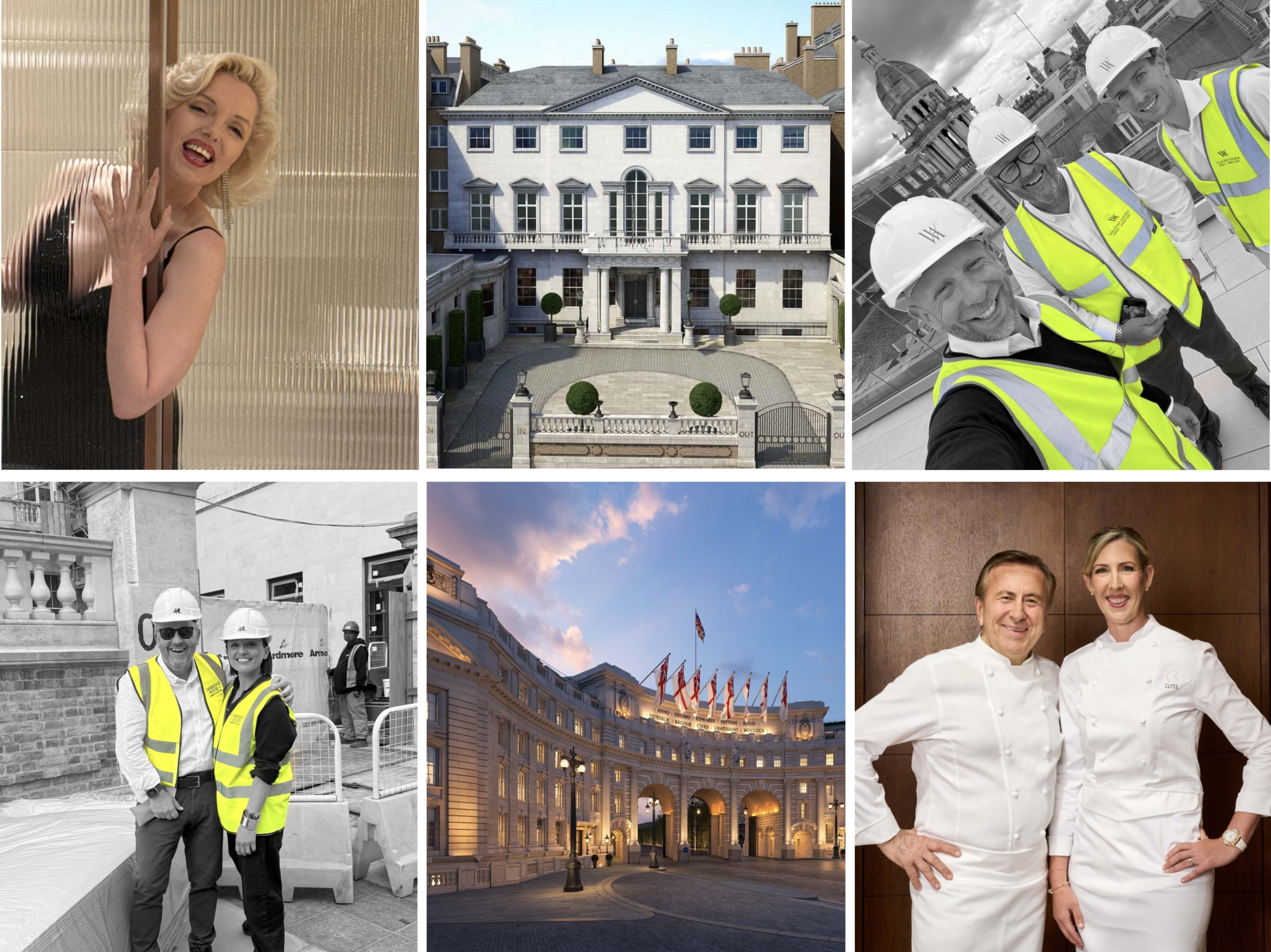
Which brings me to recent outings where I’d love to share more colour and detail than the short social posts I shared at the time. Two highly anticipated openings, under two different brands but sharing the same owners and investors, namely the Reuben Brothers, welcomed me for hard hat visits to their two historic buildings. Waldorf Astoria London – Admiralty Arch and Cambridge House, Auberge Collection. Two very exciting additions to the London luxury hotel scene.
Cambridge House, Auberge Collection
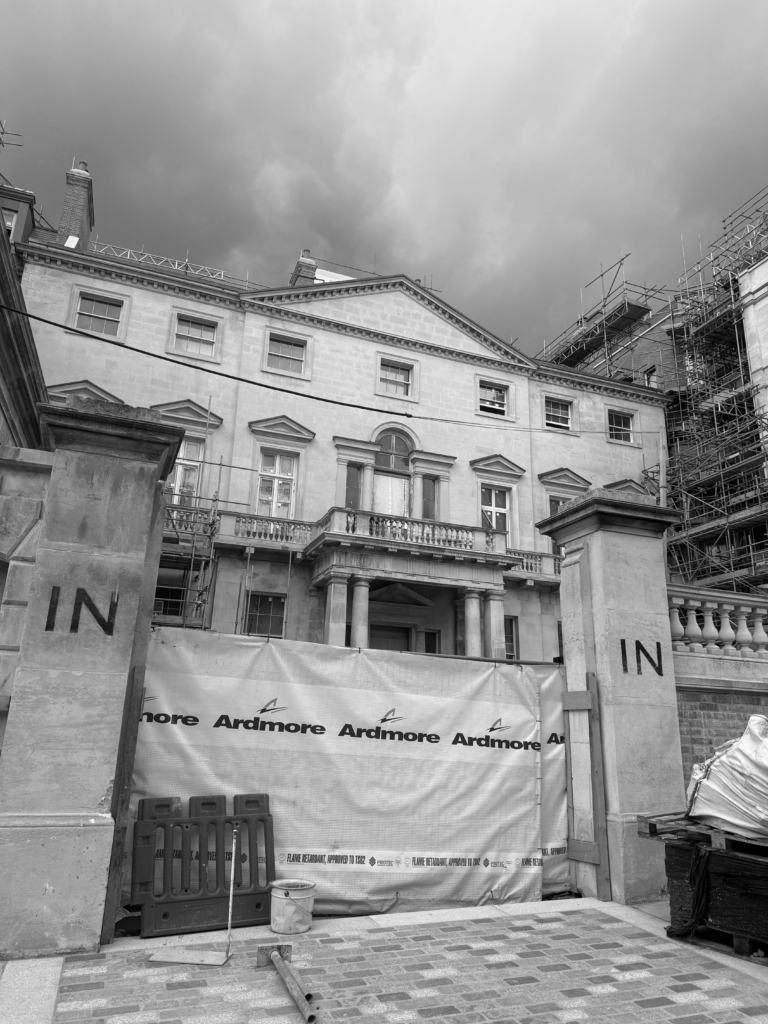 Many years ago, I remember attending an event in one of the rooms at ‘The In & Out Club’, on Piccadilly overlooking Green Park. This 18th-century Georgian mansion, the former Naval & Military private members’ club, was changing hands and falling into disrepair. Sadly, I’ve watched its decay for many years since that visit, as I strolled past it on Piccadilly.
So, on a return a couple of months ago, I got an exclusive MICE perspective on event possibilities at the soon-to-open debut of an Auberge property in the UK. The former ‘In & Out Club’, now known by its true original name, Cambridge House, has been acquired and is being developed by the Reuben Brothers, as part of a massive regeneration of the Piccadilly Estate.
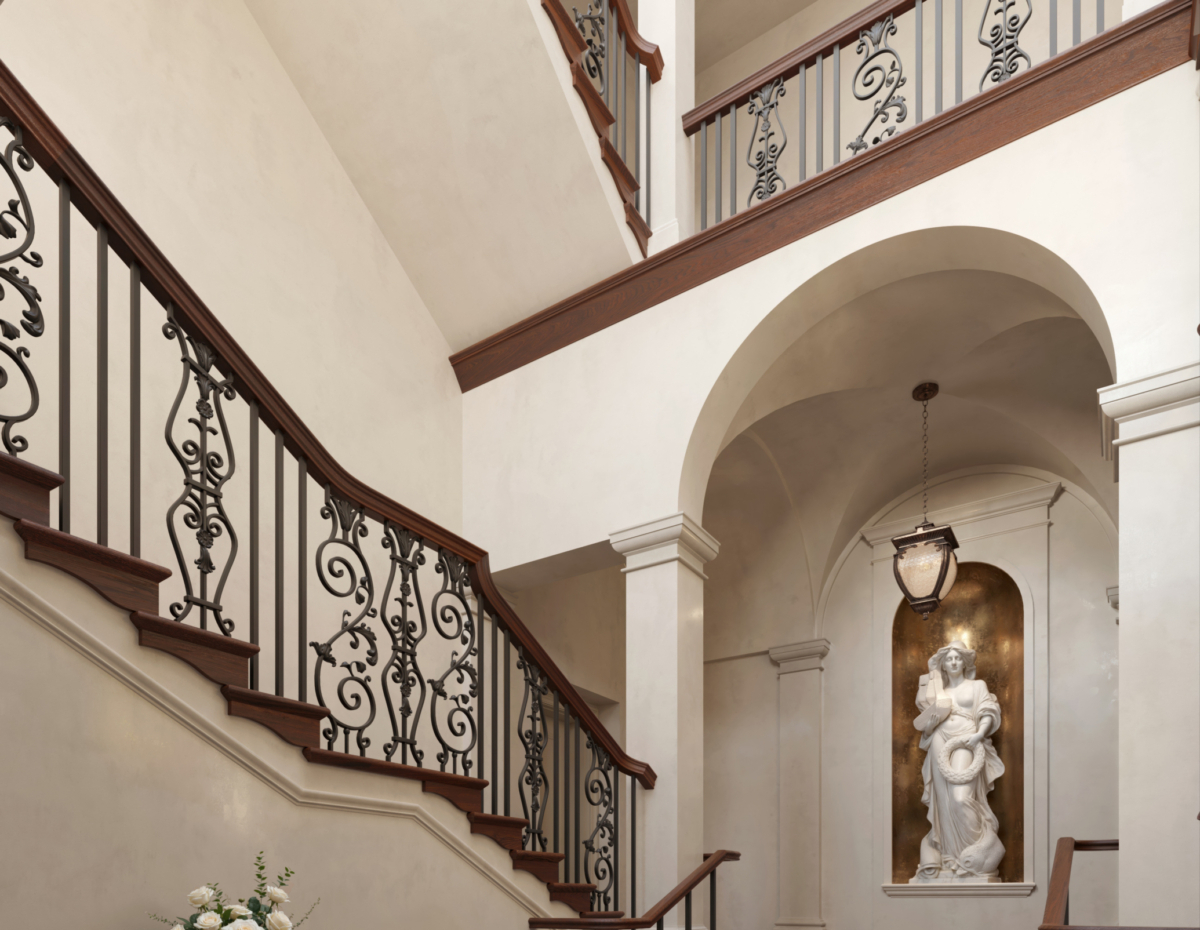
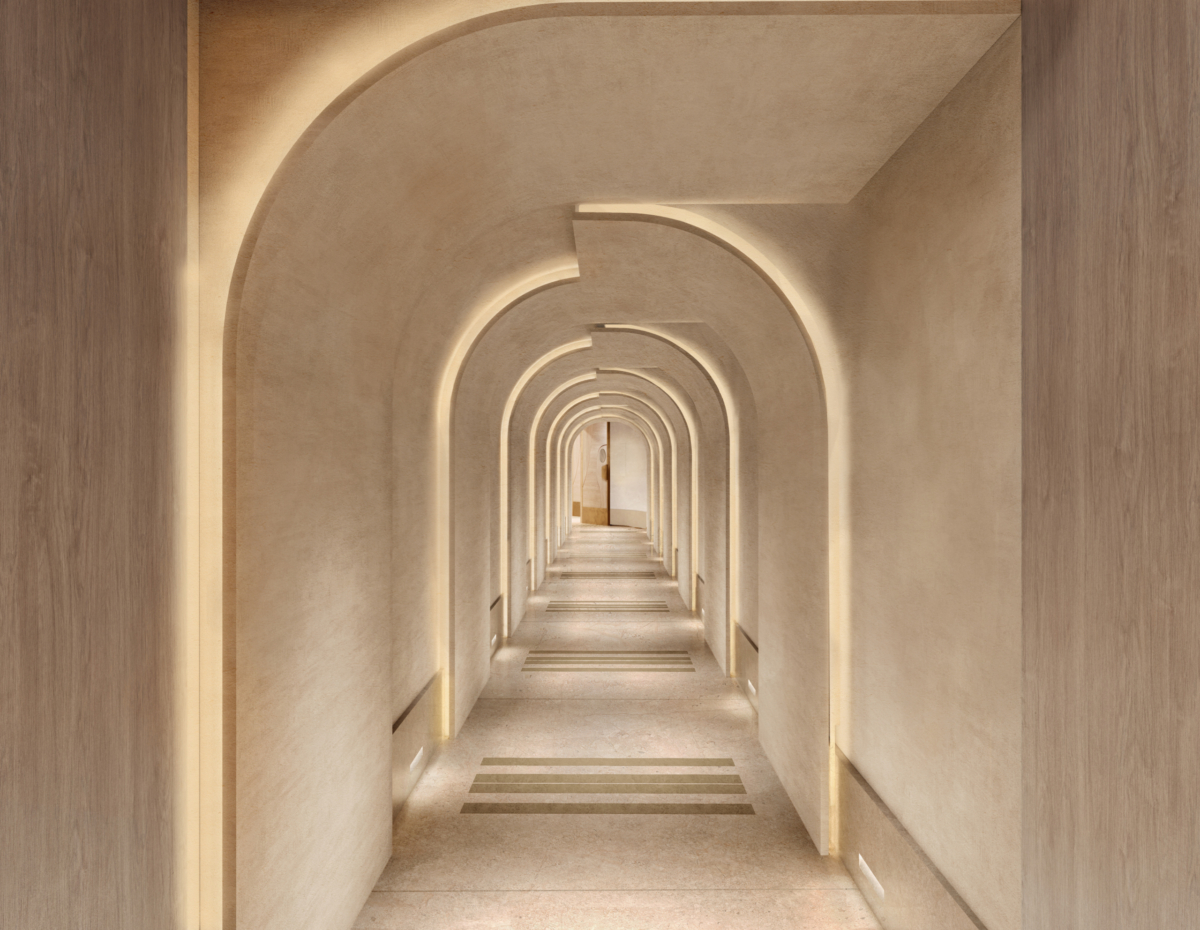
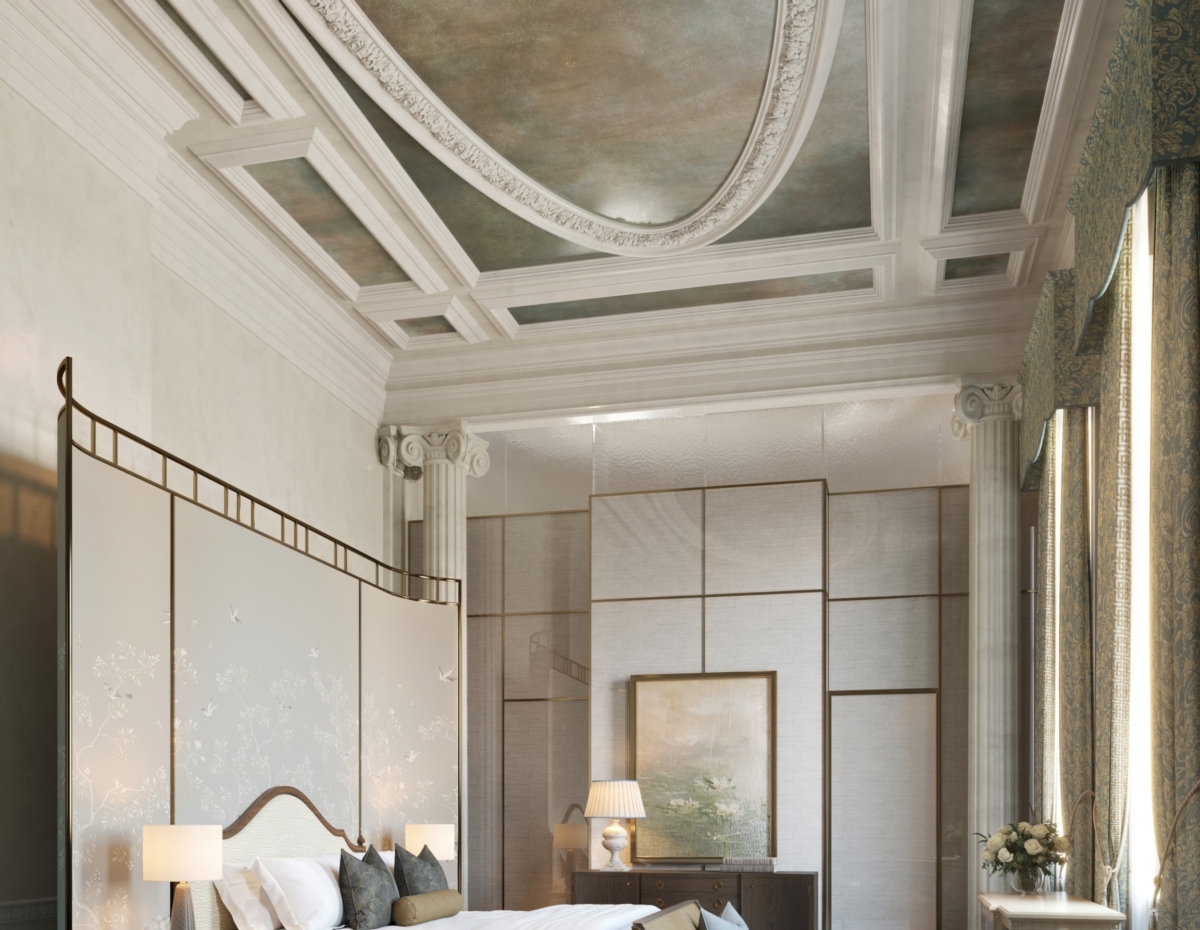
Currently scheduled to open in February 2027, I was fortunate to preview the plans as they take shape, and they’re going to be stunning. I’ve done a few hard hats, but I was truly spellbound walking through the corridors and public spaces, sample bedrooms, and learning a little more about its history and its associations with Ian Fleming, Palmerston, Queen Victoria, and the Duke of Cambridge.
This hotel will be a very exciting addition to the highly competitive high-end luxury London hotel scene. With a prime location by the park, within walking distance of the best Mayfair restaurants, backing onto the cobblestone streets of Shepherds Market, terrific neighbourhood shops and the best of Central London so close, it’s going to be an interesting watch in the 5-star deluxe end of the hotel market, competing with the classic, historic hotels such as The Dorchester, Claridge’s, The Savoy, Mandarin Oriental, etc. Plus, it’s a stunning UK debut for the Auberge brand; a brand I’ve been lucky enough to experience in Italy and California.
Key Facts
- The hotel will feature 102 exquisitely designed rooms and suites configured around a tranquil, open-air central courtyard.
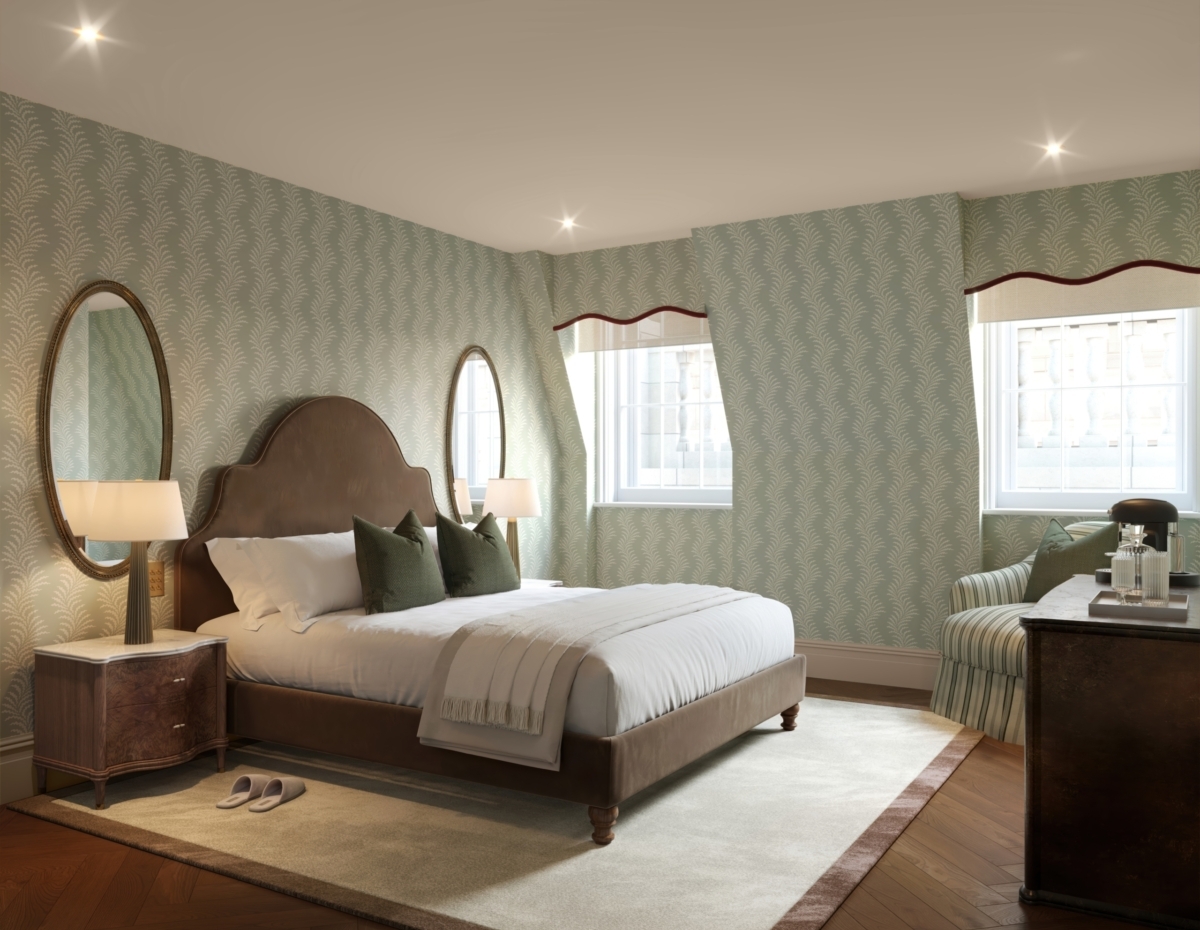
- World-renowned designers Jean-Louis Deniot and Laura Gonzalez crafted the interiors. Stunning interiors that retain classic architectural and historical features while cleverly mixing them with a beautiful colour palette and contemporary design/artwork
- Located at 94 Piccadilly in Mayfair, the property occupies a magnificent, Grade I-listed 18th-century Georgian mansion that famously housed the historic “In and Out” Naval & Military Club
- Developed by the Reuben Brothers as part of a massive £1 billion regeneration of the Piccadilly Estate, this urban sanctuary seamlessly merges classical British heritage with contemporary elegance.
We loved ….
- The awesome high-ceilinged grand suites overlooking the arrival courtyard and Green Park
- The Reuben Brothers are reported to be planning to house some of their unseen artwork in the hotel
- Stunning rooms with three main colour palettes, combining classic styling with contemporary touches.
- Gorgeous internal courtyard and private dining at The Orangery available for exclusive use for high-end, smaller events
- Location, location – just steps from high-end shopping, Mayfair restaurants and just across from Green Park. A walkable programme for a Central London celebration, top-class incentive-style events
Note: The hotel will be releasing images imminently, so this post will be updated with the first glimpses of the interior plans very shortly.
Waldorf Astoria London – Admiralty Arch
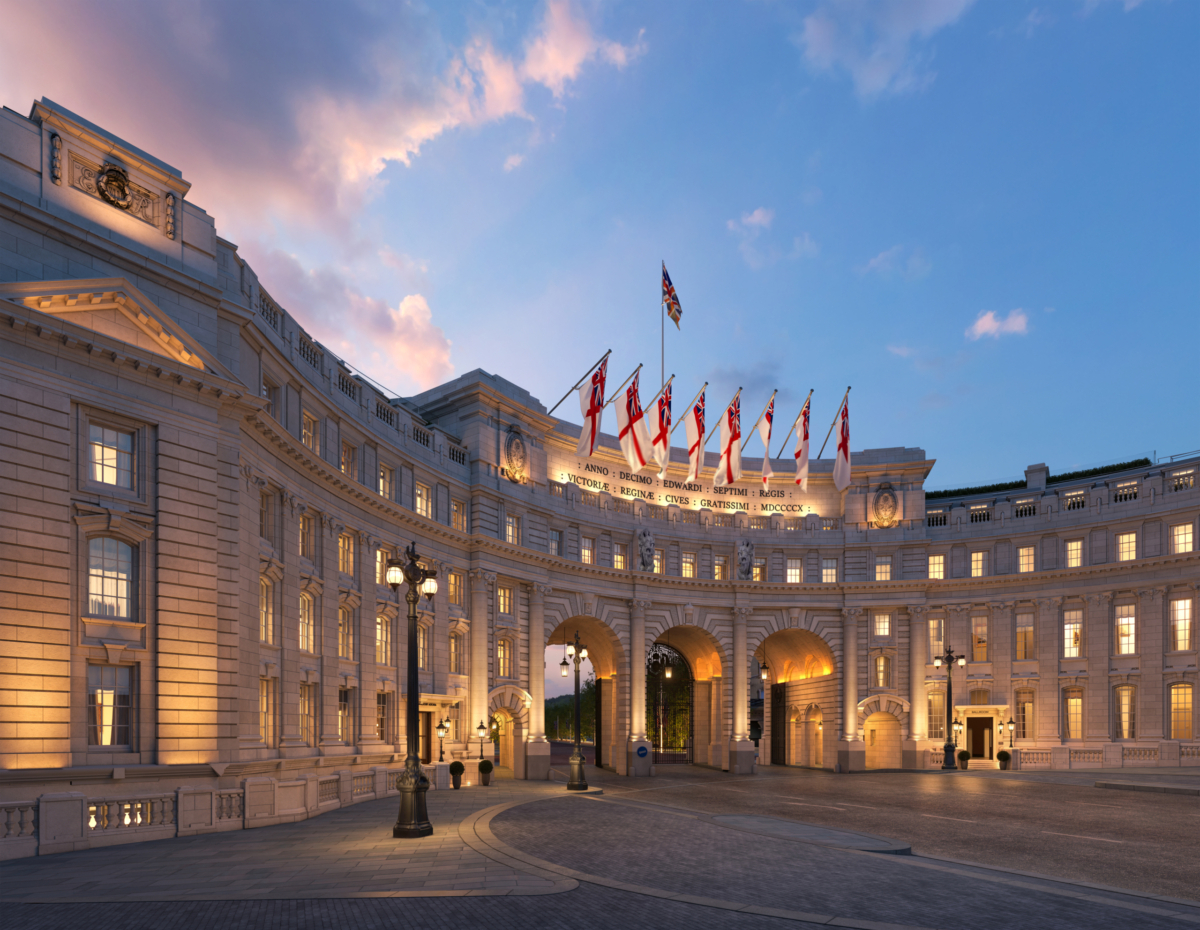
The hotel and residences are set to open by the end of the year (we hope!) within one of the capital’s most recognisable landmarks. The Admiralty Arch.
A five-minute stroll from Embankment, I arrived at a chaotic building site in the shadows of this iconic landmark at the entrance to The Mall. What a location. Positioned on The Mall opposite Buckingham Palace in St James’s, the restored Grade I listed monument will welcome overnight guests for the first time in its history.
Spanning 200,000 square feet and standing at the ceremonial heart of London, Admiralty Arch has long been synonymous with national pageantry and state occasions. Commissioned by King Edward VII in memory of Queen Victoria and designed by Sir Aston Webb, the architect behind the Buckingham Palace façade, it was conceived as a defining gateway to the capital.
Key facts include:
- 114 elegantly designed rooms, suites and residences.
- The names of the residences and signature suites will reference the building’s unique history and naval heritage, including the Nelson Suite, St James’s Residence and Victory Residence, named after HMS Victory.
- The hotel will debut two destination restaurants by Clare Smyth MBE and Daniel Boulud. The two globally celebrated chefs, whose restaurants together hold eight Michelin stars.
- Plus, a recent announcement of an additional 60-seat bar called ‘The Admirals Mess’ in partnership with The Inception Group
- A collection of grand and intimate event spaces, including a ballroom spanning 3,540 square feet featuring a nine-metre antique Murano chandelier restored in Rome, will accommodate a range of occasions, from gala dinners and weddings to conferences and brand events. Guests will arrive via a dedicated entrance and descend the building’s original oval staircase to the ballroom below.
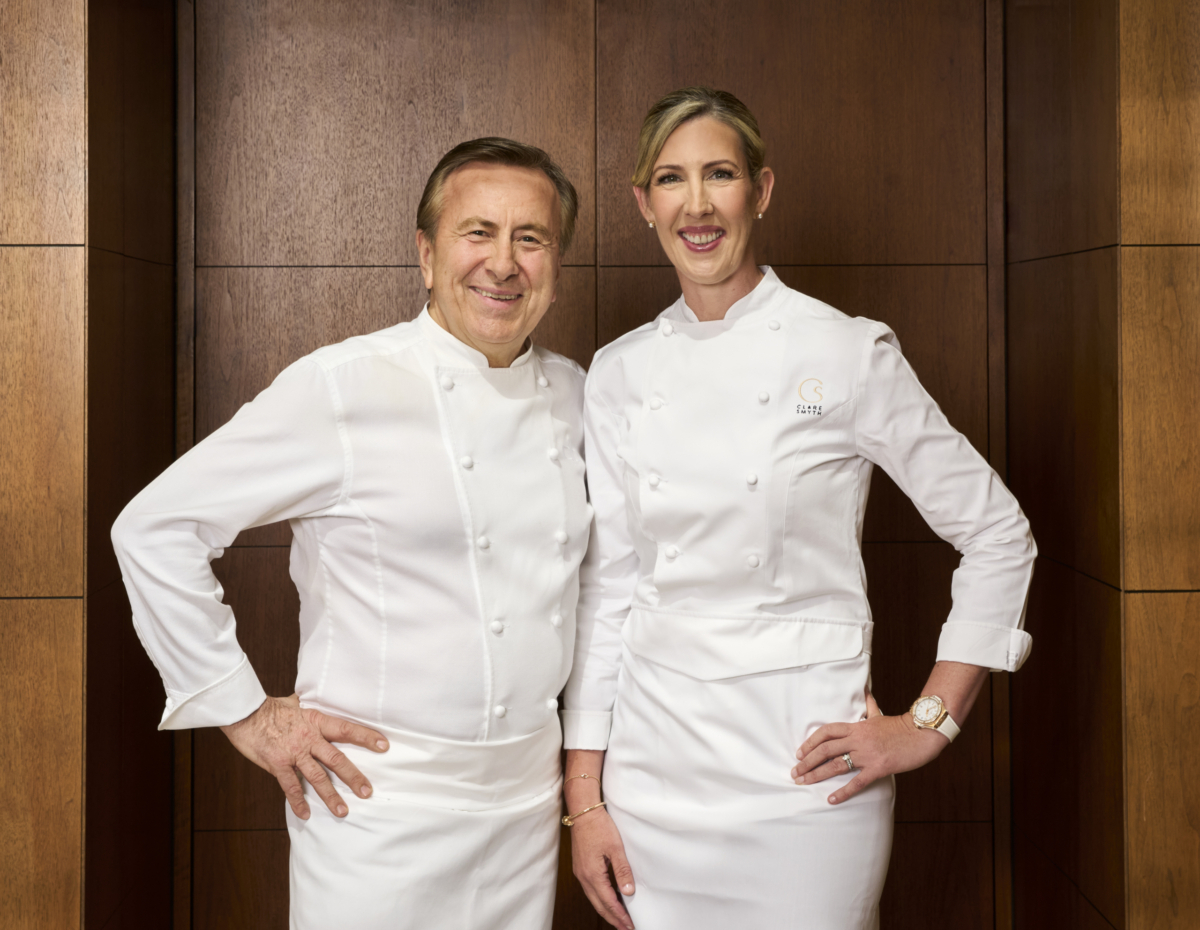
Set within the former home of the First Sea Lord, Coreus will be Clare Smyth’s fine-dining concept celebrating the UK’s coastal heritage, with menus centred on sustainably sourced seafood, British produce, and seasonal ingredients. Smyth will also introduce an intimate Whiskey & Seaweed bar concept, inspired by her iconic Potato and Roe dish. The bar will feature a curated collection of whiskies from across the UK, alongside a refined cocktail and wine programme.
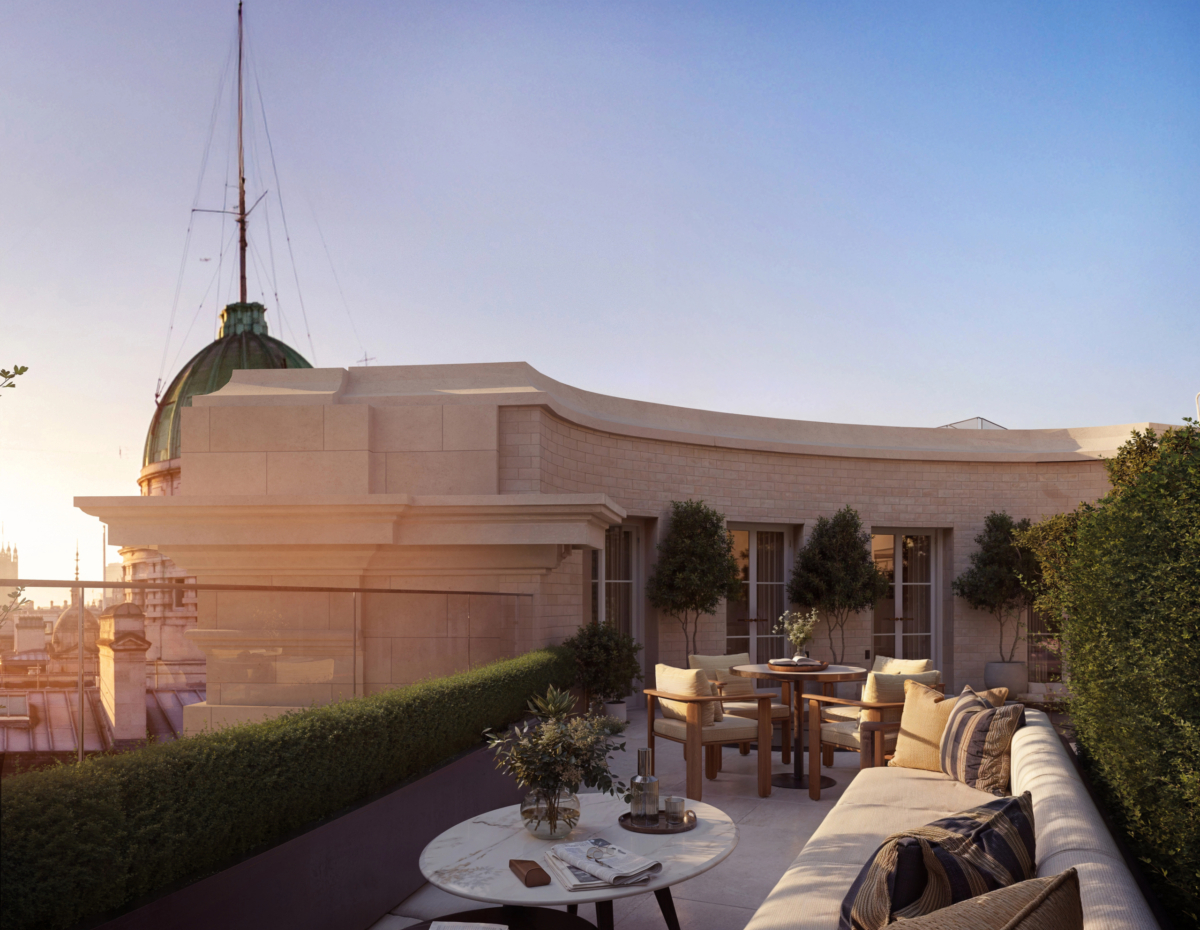
Café Boulud, located on the rooftop, will mark Boulud’s return to London with an all-day dining format, spanning breakfast, pastries and afternoon tea through to lunch and dinner. Positioned at the top of Admiralty Arch, the restaurant and terrace will offer one of London’s most distinctive rooftop dining settings, pairing Boulud’s cuisine with sweeping views across St James’s Park and Buckingham Palace.
We loved …
- Two amazing roof terraces with stunning views over Trafalgar Square and down The Mall. One is part of Café Boulud with all-day dining, and the other is for event space use. They will have cover for seasonal use, but these will be awesome locations for gatherings and definitely a USP.
- Bedrooms – we managed to see the well-spaced entry category showrooms as well as the top suites. Two principal colour palettes provide consistency across varying views, with well-appointed furnishings and a strong sense of style and place.
- Two notable chefs managing the F&B – likely to be a winner.
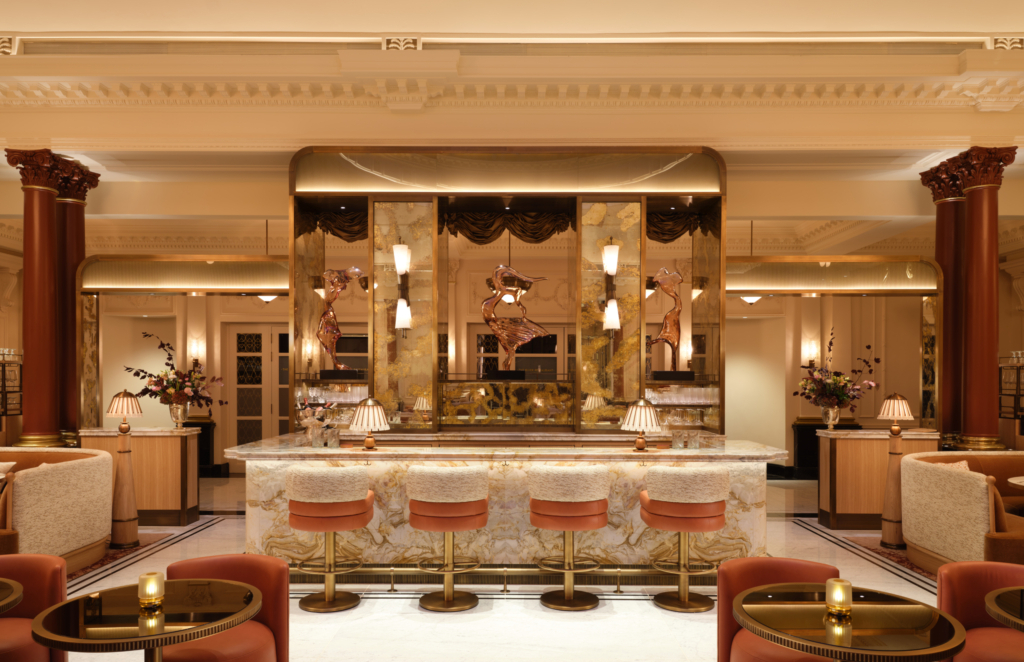
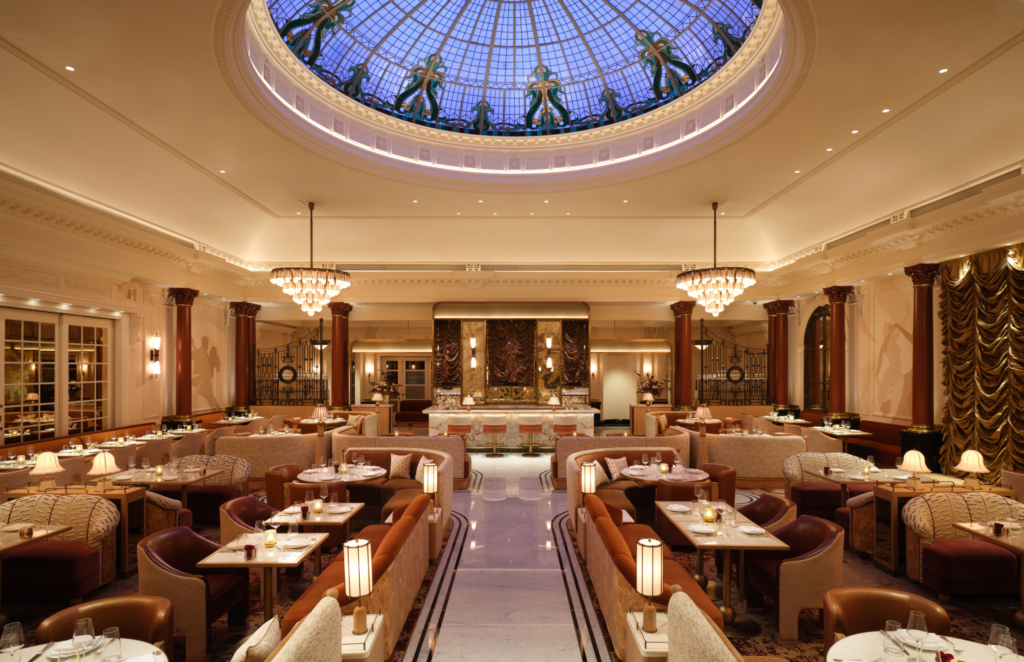
The Savoy London
No, not a hard hat, but worthy of a mention. Undoubtedly one of the most iconic and legendary hotels in London, with so many new openings, the grande dame is not one to rest on its laurels. Over the last few years, the hotel has undergone a discreet yet impactful renovation of key public spaces and its Edwardian and Art Deco-styled bedrooms.
As a besotted event planner who will never tire of organising events at The Savoy, I have clients who enjoy returning again and again. But we never missed that the bedrooms, in particular, needed some timely TLC. I am old enough to remember the pre-Fairmont takeover in 2005 and walking the original hotel corridors as they began to auction off hotel fixtures & fittings before launching into a multi-million-pound restoration from 2007 to re-open under the Fairmont brand in 2010. Now, sixteen years later, exciting plans are finally taking shape and completed phases are being launched.
Having seen so many classic hotels undergo restoration, I find some of the magic is often stripped away at first, even with the most sensitive renovations. New paint, carpets, and furniture often diminish the sense of history. At The Savoy, I know this was a concern during the 2007 renovations by Fairmont, who were eager to satisfy a younger, newer type of customer while respecting the traditional, loyal older brigade less receptive to change. They succeeded at the time, but a distinct divide emerged between their two bedroom styles: Edwardian vs Art Deco. Personally, I always preferred their Edwardian-style rooms, and I cherished the often generous room upgrades to historic river-view rooms & suites named after previous guests, including Mel Brooks and Monet. But I was becoming increasingly aware that the entry-level and lower-category rooms were losing points to new hotels and refurbished competitors.
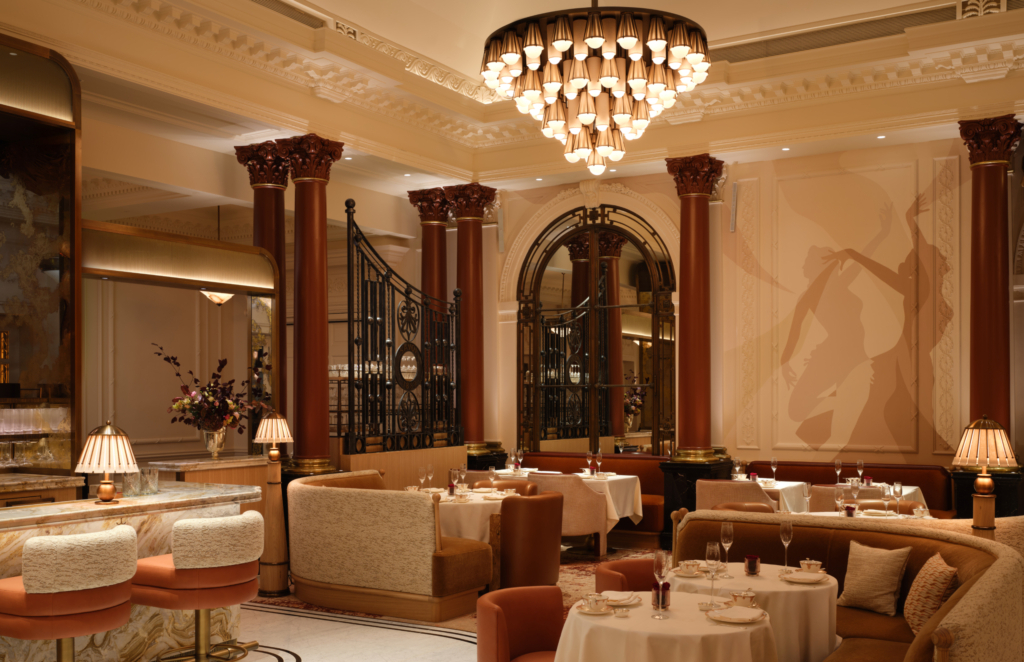
The Art Deco bedroom refurbishment is the latest phase in the hotel’s evolution, following the launch of a new all-day dining restaurant, Gallery, in 2024, alongside two boutiques: scone shop, Scoff, and The Florist at The Savoy. The first collection of rooms and suites is now bookable, with phased refurbishment set to continue until 2027, ensuring minimal impact to the guest experience.
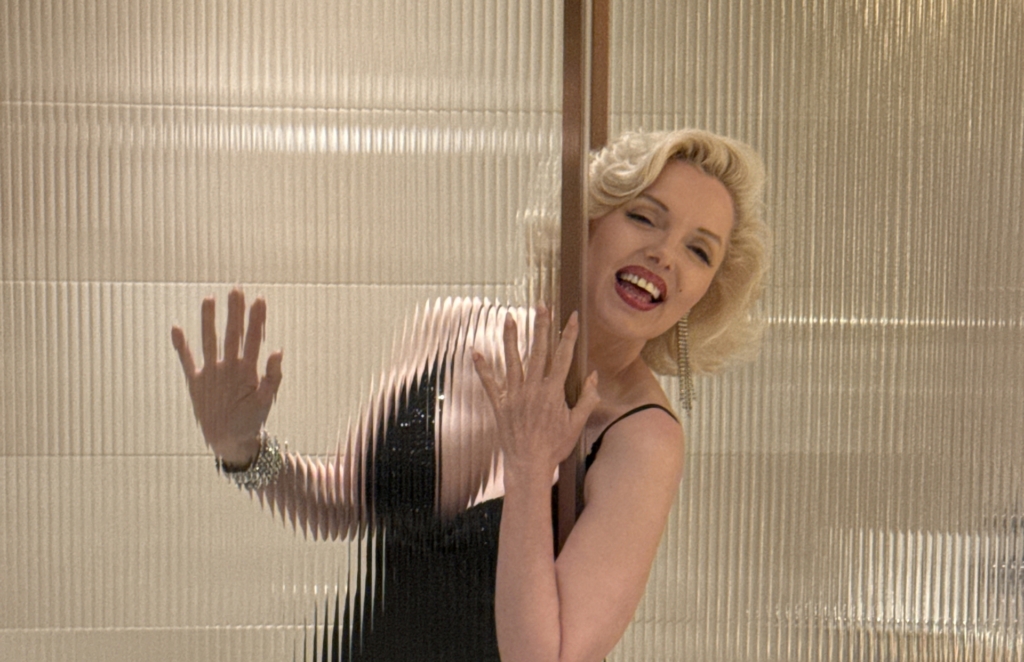
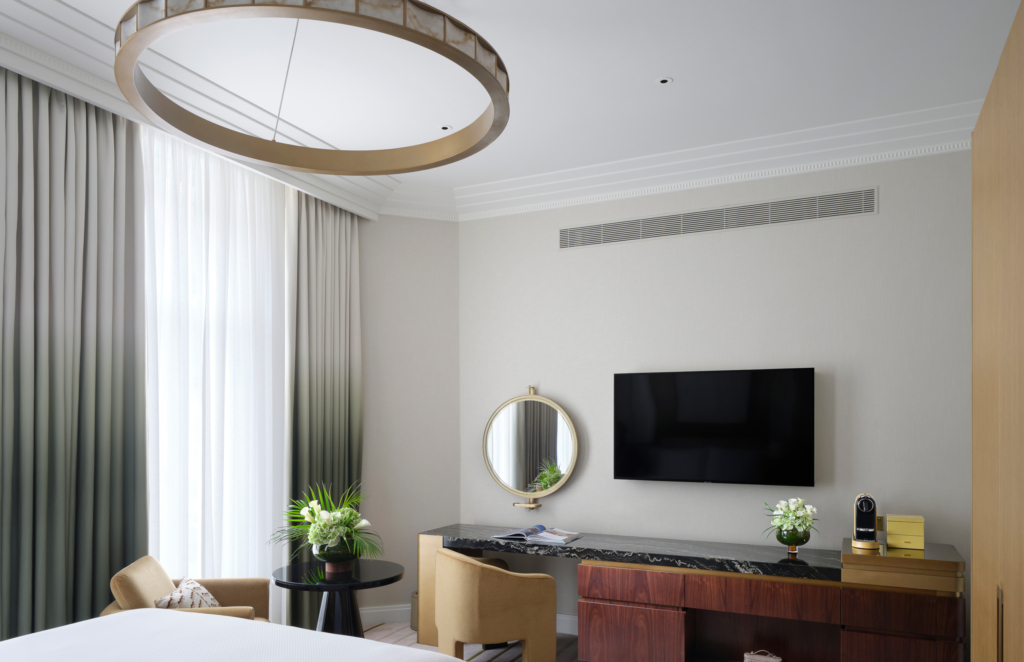
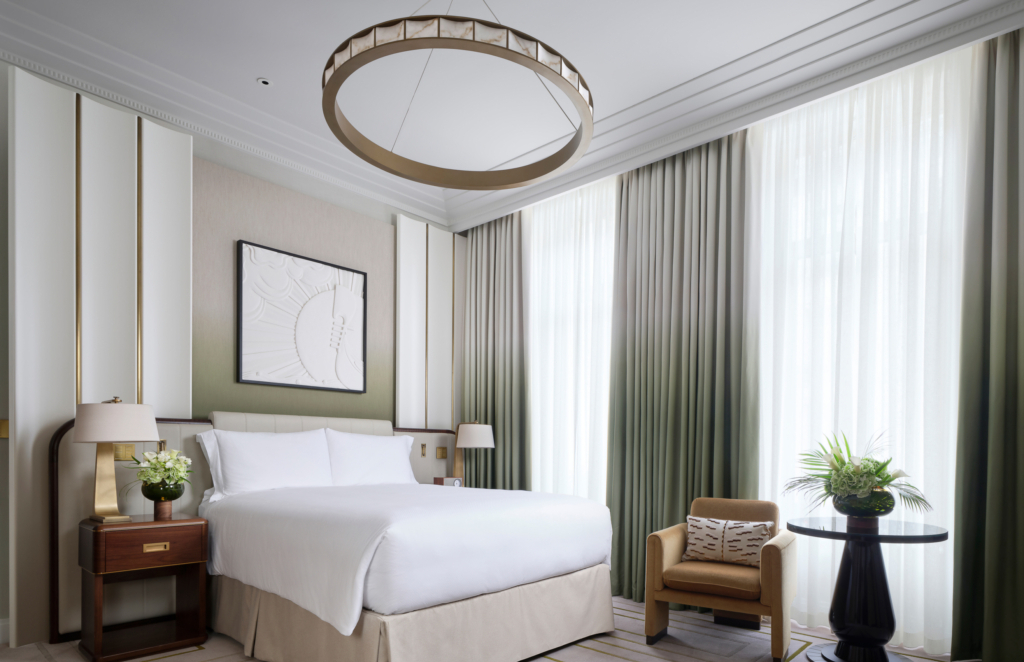
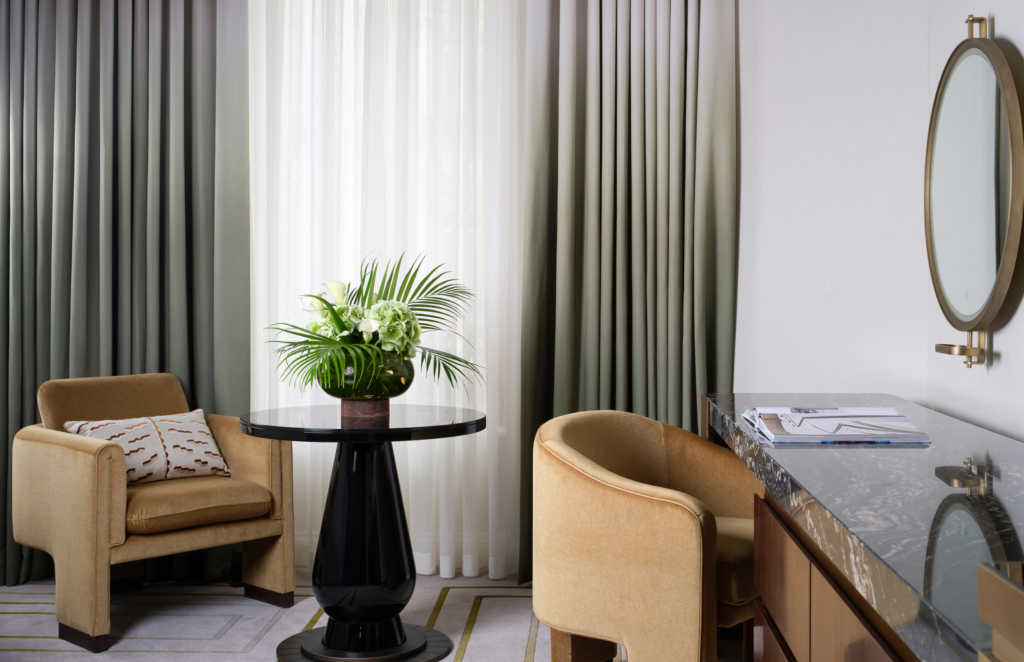
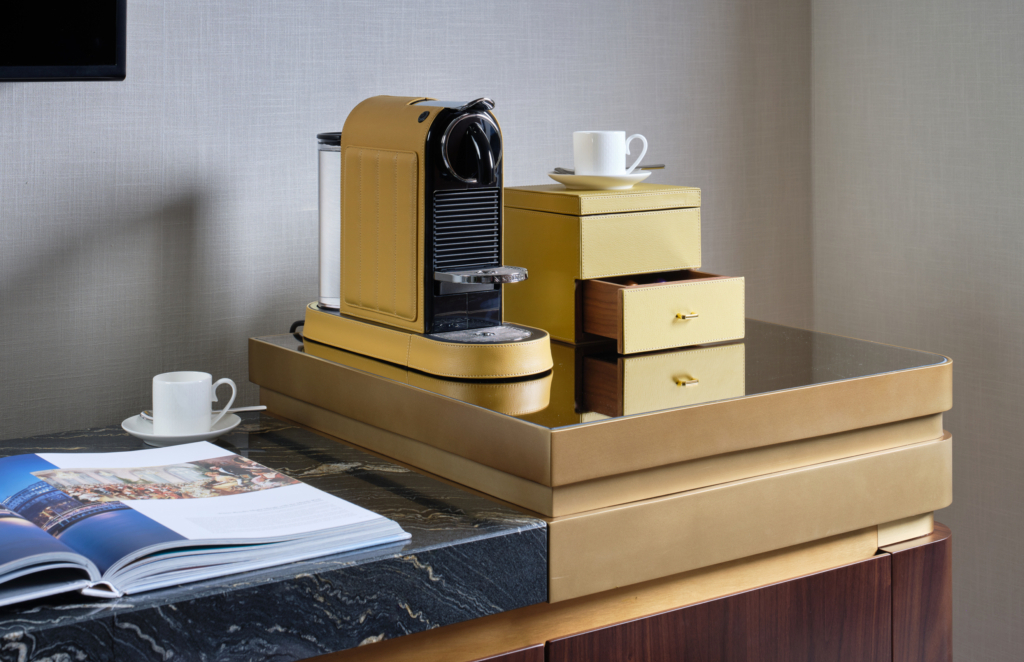
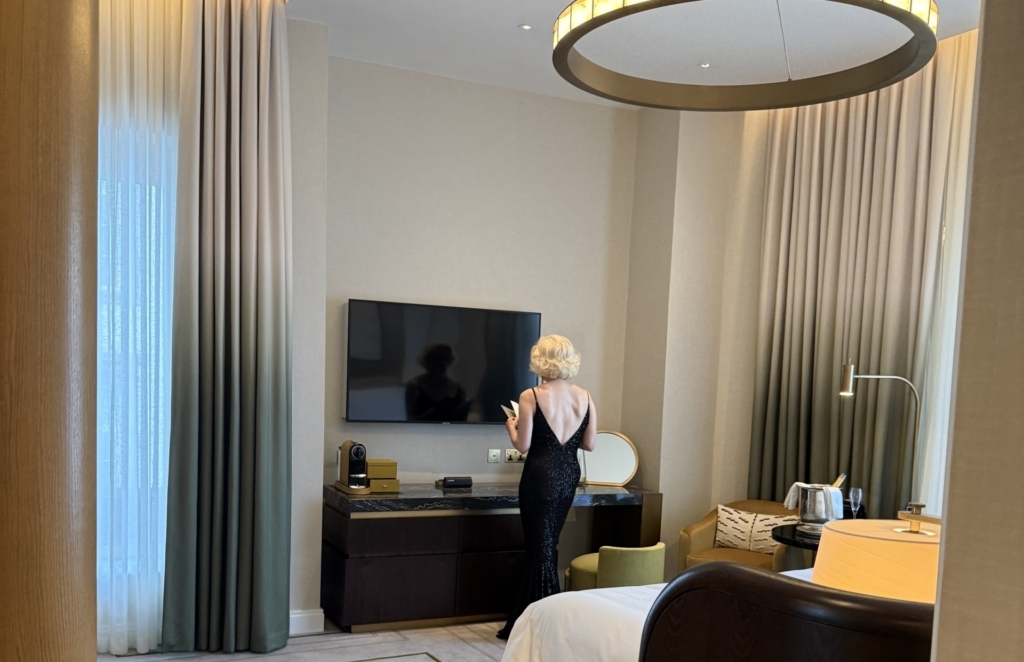
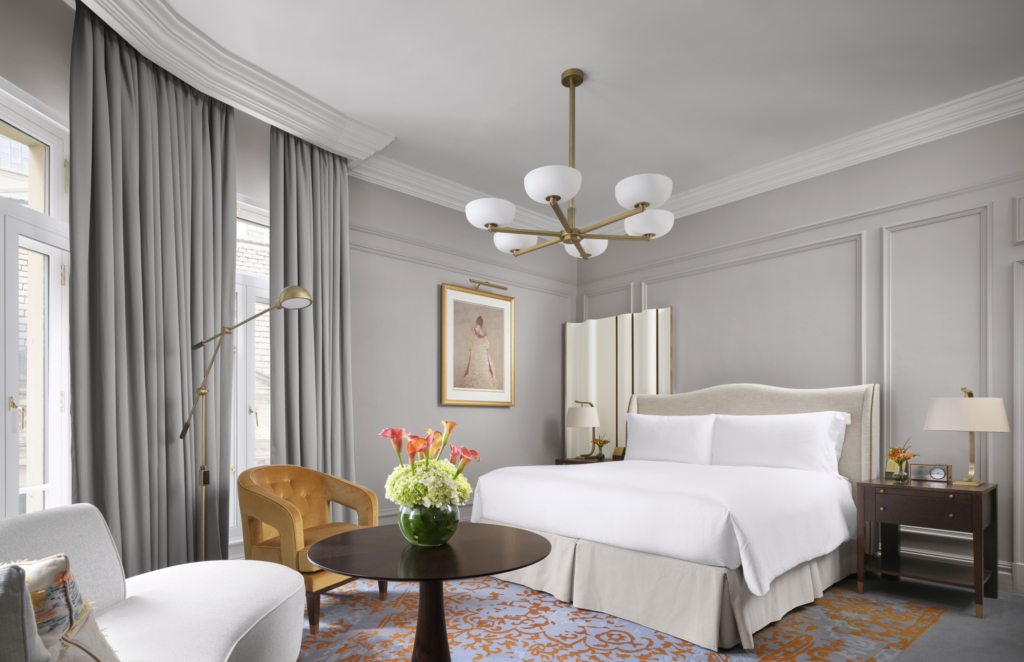
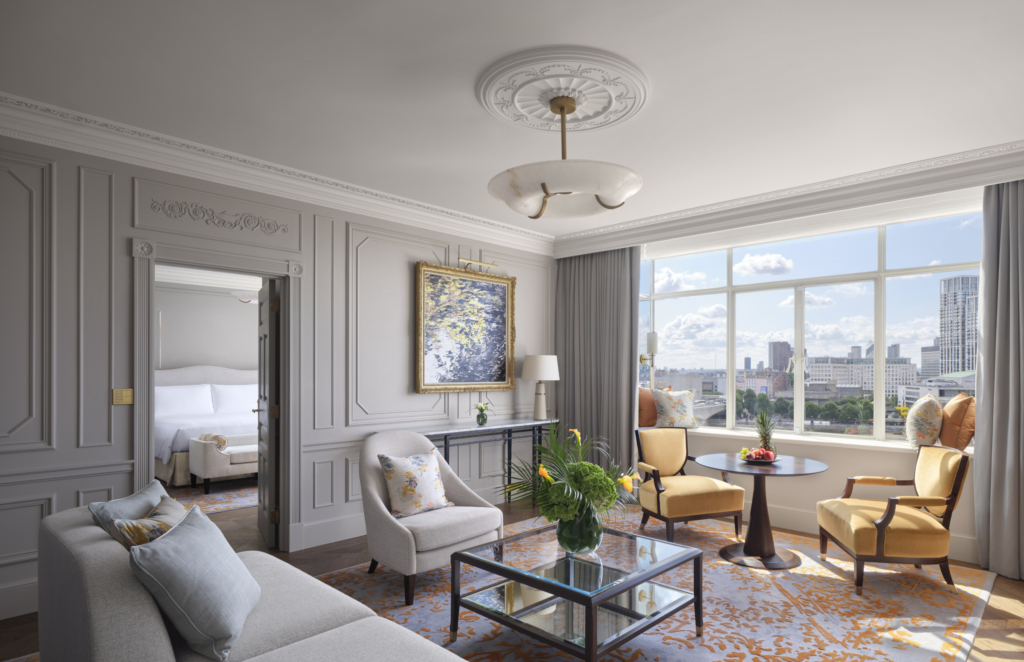
The new rooms are stunning. The new look celebrates The Savoy’s history, reinventing its distinctive Edwardian and Art Deco styles for the modern traveller with elevated colour palettes, luxurious textures and bespoke furnishings. There is less of a divide between the two styles, which excited me during a stay last year and a more recent visit to see the latest Art Deco rooms. The Savoy brilliantly showcased its rooms during the visit, and we stumbled across the most fantastic Marilyn Monroe lookalike as we entered a new Art Deco room. Marilyn was one of its many legendary hotel guests back in the fifties.
The Savoy’s Edwardian-style rooms, first introduced at the turn of the 20th century, have been elevated with warm silvers, ivory silk, marble and antique brass finishes. The light and bright scheme is complemented by accents of ochre and amber, carpet designs featuring abstract Edwardian motifs, and artwork that references the legendary performances of the Savoy Theatre.
The Art Deco rooms capture the era’s glamour and drama, infusing subtle geometric shapes into furniture such as headboards and feature mirrors, alongside highly polished finishes and a colour scheme based on the hotel’s signature shade of green.
For more information
Cambridge House, Auberge Collection
Waldorf Astoria London – Admirality Arch
The Savoy
If you plan luxury, high-end events, please contact hello@eveology.com for more information, insights and bespoke event support.